

Hey there! I'm a supplier of Cardboard Merchandise Displays, and today I'm stoked to chat about how you can use 3D elements in a cardboard merchandise display. It's a game - changer in the world of retail, and I'm here to share some cool tips.
Why 3D Elements Matter
First off, let's talk about why 3D elements are so important. In a world where consumers are bombarded with countless marketing messages, a 3D cardboard display can really make your product stand out. It adds depth, dimension, and a sense of realism that flat displays just can't match. When a customer walks by a 3D cardboard display, it grabs their attention and makes them stop to take a closer look.
Choosing the Right 3D Elements
When it comes to using 3D elements in your cardboard merchandise display, the first step is to choose the right ones. You've got a ton of options here. You could go for simple geometric shapes like cubes, pyramids, or spheres. These can be used to create a modern and minimalist look. For example, if you're displaying tech products, a stack of cube - shaped cardboard elements can give a sleek and high - tech vibe.
Another option is to use 3D elements that are related to the product you're selling. If you're selling toys, you could create 3D cardboard cut - outs of the toy characters. This not only makes the display more interesting but also helps customers immediately associate the display with the product.
Incorporating 3D Elements into the Design
Once you've chosen your 3D elements, it's time to incorporate them into the overall design of the cardboard display. One way to do this is to use the 3D elements as focal points. For instance, you could place a large 3D model of the product in the center of the display. This draws the customer's eye and makes the product the star of the show.
You can also use 3D elements to create a sense of movement. For example, you could arrange a series of triangular 3D elements in a way that gives the impression of a wave. This adds energy to the display and makes it more engaging.
Structural Considerations
When working with 3D elements in cardboard displays, it's important to think about the structure. Cardboard is a relatively lightweight material, so you need to make sure that your 3D elements are well - supported. You can use internal supports or reinforce the cardboard with additional layers to ensure that the 3D elements stay in place.
For larger 3D elements, you might want to consider using a frame or a base to provide extra stability. This is especially important if the display will be in a high - traffic area where it could be bumped or jostled.
Lighting and 3D Elements
Lighting can play a huge role in enhancing the impact of 3D elements in a cardboard merchandise display. You can use spotlights to highlight specific 3D elements, creating a dramatic effect. For example, if you have a 3D model of a product, shining a spotlight on it can make it look more realistic and eye - catching.
You can also experiment with different types of lighting, such as colored lights or backlighting. Colored lights can add a fun and festive touch to the display, while backlighting can create a silhouette effect that makes the 3D elements look even more three - dimensional.
Different Types of Cardboard Displays with 3D Elements
Let's take a look at some different types of cardboard displays where 3D elements can be used effectively.
Cardboard Display for Floor
A Cardboard Display for Floor is a great place to use 3D elements. You can create large - scale 3D structures that sit on the floor and attract customers from afar. For example, you could build a 3D cardboard castle for a fantasy - themed product display. The height and size of the floor display allow for more elaborate 3D designs.
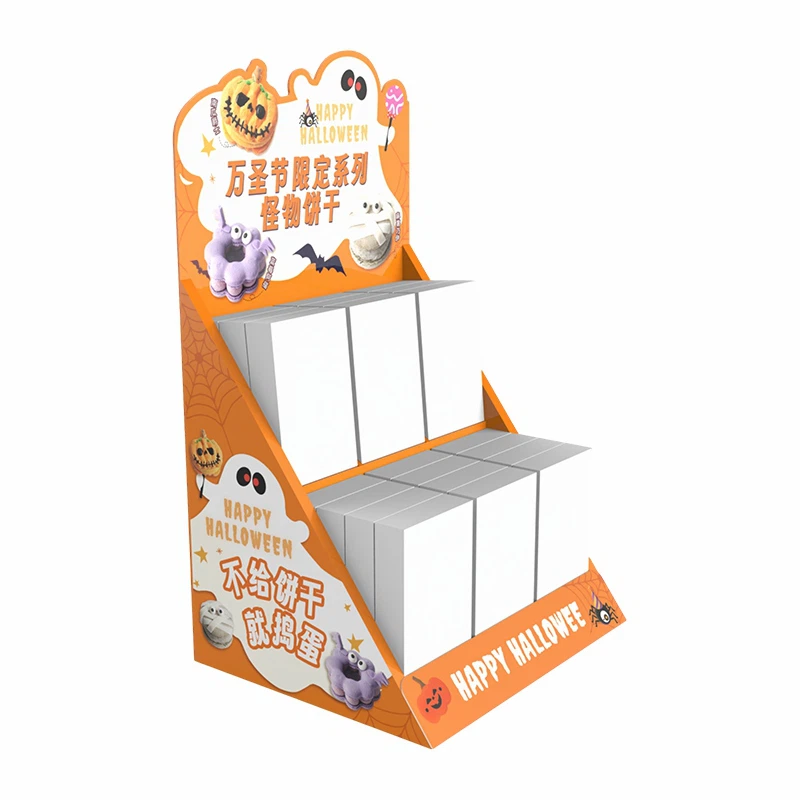
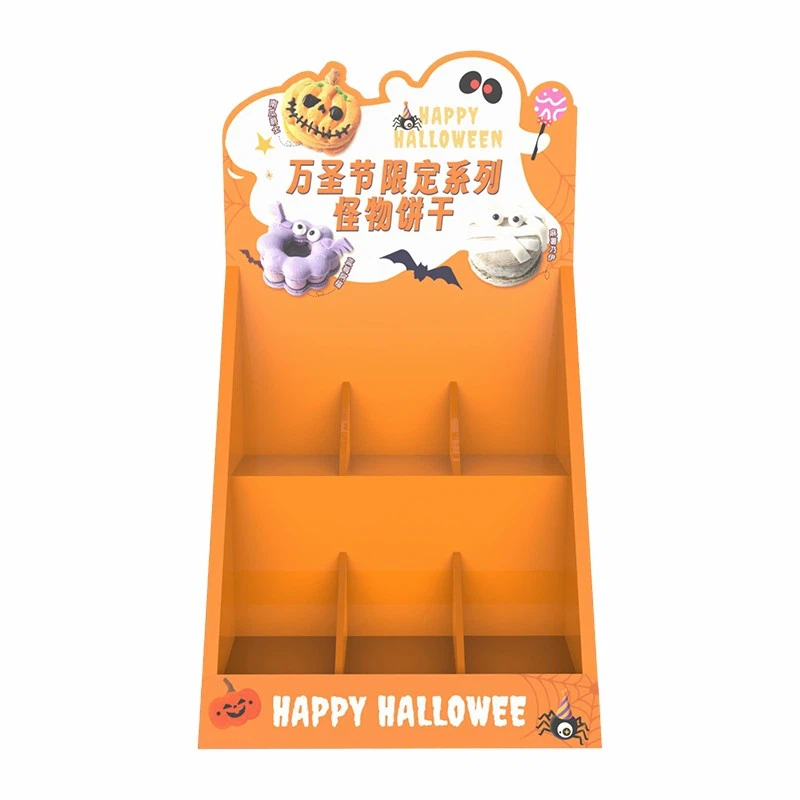
Cardboard Shelf Display
A Cardboard Shelf Display is another option. You can use 3D elements to break up the flatness of the shelves. For instance, you could place small 3D figurines on the shelves to add a bit of whimsy. These 3D elements can also help to organize the products on the shelf and make them more visually appealing.
Cardboard Product Display
The Cardboard Product Display is all about showcasing the product. You can use 3D elements to create a unique and immersive experience for the customer. For example, if you're displaying a perfume, you could create a 3D cardboard bottle shape that holds the actual perfume bottle. This not only protects the product but also makes the display more interesting.
Cost - Effective 3D Solutions
One of the great things about using 3D elements in cardboard displays is that it can be cost - effective. Cardboard is an inexpensive material, and you can create a wide variety of 3D shapes and structures without breaking the bank. You can also reuse or recycle the cardboard displays, which is not only good for the environment but also helps to keep costs down.
Customization and Branding
3D elements in cardboard displays offer a great opportunity for customization and branding. You can print your brand logo, colors, and messaging directly on the 3D elements. This helps to reinforce your brand identity and make the display more memorable. For example, if your brand has a bright and bold color scheme, you can use those colors on the 3D elements to make the display really pop.
Conclusion
Using 3D elements in a cardboard merchandise display is a fantastic way to make your products stand out in a crowded retail environment. Whether you're using simple geometric shapes or elaborate 3D models, the key is to be creative and think outside the box. With the right design, structure, and lighting, you can create a display that not only attracts customers but also drives sales.
If you're interested in incorporating 3D elements into your cardboard merchandise displays, I'd love to have a chat with you. We can work together to come up with a custom solution that meets your specific needs and budget. Don't hesitate to reach out and start the conversation!
References
- Retail Merchandising: Principles and Practices. This book provides in - depth knowledge about effective display strategies.
- Cardboard Packaging Design: A Guide. It offers insights into the design and construction of cardboard displays.